RUNDE'S ROOM: 5 Activities Posts

Showing posts with label 5 Activities Posts. Show all posts

5 Activities for October in the Upper Grade Classrooms

17 October 2021

Activities for October in Upper Grade Classrooms

I love everything about the Fall.  It's the perfect combination of weather, beauty, and all things cozy.  It's also one of my favourite months in the classroom.  We're starting to get our routines down pat, beginning of the year assessments are complete (or almost ... haha), and our classroom community vibes are pretty strong.  We can start to handle some more engaging and hands-on activities ... and in my opinion, there is no better month to do it.  


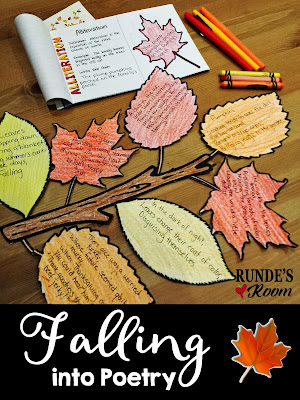
Falling into Poetry Writing and Figurative Language Activities
1.  Fall Poetry Books
- Falling into Poetry is easy with this resource that's perfect for the beginning of the year when the leaves start to change.  Students get an introduction to many different forms of poetry, as well as figurative language.  There are examples of each type of poetry and figurative language device, as well as space for students to complete their own examples.  Completed pages turn into a beautiful poetry mini book.  Each poetry form also has a leaf outline so students can copy their best poems onto the leaf and colour for display.  There is a branch included for each student to make their own little poet-tree, or individual leaves could be added to a bulletin board, kraft paper tree in the classroom, or REAL branches for a gorgeous autumn display.  

I have also integrated this into an art activity, where students paint a Fall background on a page, then choose 2 -4 completed poem leaves to glue down onto the background for a beautiful writing and art piece.  Click either picture to take a closer peek at this resource in my store.


2.  Clay Sculpted Leaf Art - Every year I look forward to decorating my classroom with gorgeous Fall Leaf Art.  For these beautiful Fall Leaf bowls, we used air dry clay.  I had students pick a real leaf from the school ground (a fallen leaf, of course) - one they felt they could trace.  Students were each given some air dry clay to flatten out to about 1/4 of an inch thickness (and just slightly larger than the leaf they chose).  Note - be sure to have them work with the clay on some type of paper, it's no mess that way.  Students then used a pencil to trace around their leaves on the wet clay, and then used a plastic butter knife to "cut out" their leaves and draw on the veining (copying their real leaf).  When done, we put them vein side down, over some crumpled up paper to sort of form the leaves into a slight bowl shape.  It takes about 3 - 4 days to fully dry.  Once dry, paint (we used acrylic paint) the leaves in gorgeous Fall colours.  Experiment a bit with this.  Using a toothbrush to splatter some of the paint on top makes very realistic spotting on the leaf - and practice mixing and blending with colours.  We sealed our leaves with a spray varnish when complete, but you don't need to do this step.


Fall Leaf Art Lesson

3.  More Leaf Art -
This Fall Leaf Art Lesson is perfect to study line, shape, form, and colour with the elements of design.  Students will trace 2 - 4 leaves on their page, then fill the rest of the page with concentric circles (if you're brave you can have students use a compass, or use the page I included with the circles already drawn).  Choose 3 or more warm colours for the leaves, and colour each section made (by the circles) in a pattern.  When the leaves are coloured, choose 3 or more cool colours for the background, again alternating colours in a pattern.  The leaves look like they're falling against a beautifully windy sky backdrop, or falling into a pool of water.


October Literacy 3D Activities

4.  ALL the Craftivities
- While I do love to sneak in my 3D craftivities at different points in the year, I have to admit, all the Fall ones top my list.  These activities make the perfect station activity, or independent work activity so you can meet with small groups or get some assessment done while students are hard at work.  Each one takes approximately one week.  I usually have students finish 2 questions (2 panels) from Monday - Wednesday.  On Thursday they colour all the panels, and then Friday is assembly day.  I have craftivity packages for both literacy and math.  The October Literacy 3D Craftivities Bundle has two different book report resources covering story elements and reading comprehension (the pumpkins and the ghost), as well as a fun one for synonyms and over-used words.  The Fall Math Review 3D Activity Bundle has a candy corn place value review, as well as a pumpkin pie shaped activity with word problems (about pumpkin pies, of course).  Click on either title or picture to the right to see these resources in my TpT store.

Fall Math Review 3D Activity Bundle


5.  Fall Drama Circle
- You can't have all that Fall beauty without a little drama. ;)  A drama circle, that is.  This is a new drama circle with a Fall theme - make a circle, hand out the cards, and have some fun.  If the weather is nice, this one is even better outside!  All drama circles now contain colour and black and white copies, and a observation rubric for assessment of drama skills.  Click HERE or on the picture below to take a peek.

Fall Drama Circle
Fall Activity Bundle for Upper Grade Classrooms

You can find all of these Fall-themed resources in one bundle that can take you through the month of October in your classroom.  You can out my Fall Activity Bundle HERE, or by clicking the picture on the right.

Candy Corn Decimals Printable
And lastly, if you made it all the way to the bottom, reward yourself with this little Candy Corn Decimals Place Value Printable.  Just click on the picture to the right to grab a copy for yourself.  Happy Fall, Y'All!


1

5 Activities for Teaching Problem-Solving

05 February 2017
Different Activities, Strategies, and Resources to Help Your Students Become Masters at Problem-Solving in Math
This "5 Activities for Teachingpost (click the link for more 5 Activity Ideas) is all about Problem-Solving in Math (and there just may be 6 activities in this one).  As our testing relies heavily on our students' ability to problem-solve and analyze and solve word problems, we have a heavy focus on problem-solving all year long.  This post aims to give you some new ideas to get your students digging deep into word problems, on their way to becoming problem-solving masters.  


Runde's Room:  Activities for Teaching Problem-Solving in Math

1.  Go Numberless - 

I recently started using Numberless Word Problems in my classroom and it has changed the way we look at word problems.  By taking the numbers out of the question, students work with the actual problem itself - deepening their understanding of what the problem actually means and how to go about solving it.  It is fantastic for differentiation because students start to substitute their own numbers into the problem (working with numbers they are comfortable with using) as a way of scaffolding the process.  You can read more about Numberless Word Problems and see exactly how I use them in my classroom in my blog post HERE.

Runde's Room:  Activities for Teaching Problem-Solving in Math

2.  Use CUBES to help students analyze the problem before they begin solving - 

CUBES Strategy - Different Activities, Strategies, and Resources to Help Your Students Become Masters at Problem-Solving in MathBefore I began using CUBES with problem-solving, I would watch in frustration as my students plucked numbers from the question and began solving without really thinking about WHAT they needed to solve.  Sometimes they would miss some of the steps in a multi-step question, and other times their answers weren't actually answering what the question asked.  By introducing CUBES, my students now actually slow down and examine the question fully first ... leading to much greater success in problem-solving activities.  I introduce CUBES very early in the school year.  I hang an anchor chart in the classroom, and we complete an entry in our Interactive Math Journals (click HERE to see this resource in greater detail).


CUBES Strategy - Different Activities, Strategies, and Resources to Help Your Students Become Masters at Problem-Solving in Math

CUBES Strategy - Different Activities, Strategies, and Resources to Help Your Students Become Masters at Problem-Solving in MathI also created sets of concept-related Word Problem Activities using CUBES.  These resources contain a checklist for CUBES right on the page that students need to complete before they begin solving the problem.  I LOVE using these pages for quick formative assessments in the classroom - and they make a great portfolio piece to keep parents informed of what we are doing in the classroom, and how their child is progressing.  There are 2 different versions of each word problem so you can easily provide differentiation for your students or provide some extra practice for students who need some reinforcement with the concepts.


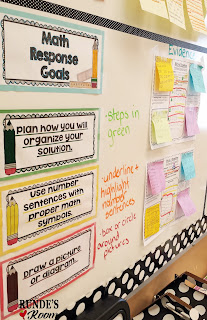
3.  Establish a set of success criteria for the steps to solving the problem - 

Building Better Math Responses - Different Activities, Strategies, and Resources to Help Your Students Become Masters at Problem-Solving in Math
Building Better Math Responses - Different Activities, Strategies, and Resources to Help Your Students Become Masters at Problem-Solving in MathOnce my students know how to analyze the word problem, it's time to start talking about how to SOLVE the problem.  Because we have a HUGE focus on communicating HOW the students solve the problem, just showing their work isn't enough - they have to show their thinking, too.  Using my Building Better Responses in Math has been the key to this in my classroom.  This resource breaks down the problem-solving process step-by-step and creates a set of easy-to-follow success criteria for students, ensuring that they have not only solved the problem, but also communicated their thinking during the process.  We start out with our first success criteria, and every time we master a criteria (usually every two to three weeks), we add another criteria to our board (there are 9 criteria in all).  I also post EVIDENCE (a student-created exemplar) alongside the criteria each time we add a new one.  This gives the students a model to reference.  This resource also comes with printables for students to practice each criteria in isolation, as well as pages for scaffolding the steps each time they add a new one.  All pages contain a checklist for students so they can be sure they are completing each step.  

4.  Work Backwards - 

Work Backwards - Different Activities, Strategies, and Resources to Help Your Students Become Masters at Problem-Solving in Math
I LOVE this open-ended activity for getting students to think about word problems.  I start with an answer, and get each student to write a word problem for the answer on a sticky note.  They quickly check in with me before they post their question.  When we first started this activity, students were including the answer IN their question, but with more practice, they are now thinking more about writing the word problem with the answer in mind.  To extend this activity, students can choose a word problem written by a peer, and work to solve it - PROVING the answer is correct.

Work Backwards - Different Activities, Strategies, and Resources to Help Your Students Become Masters at Problem-Solving in Math

5.  Work Together - 

Stick-It-Together - Different Activities, Strategies, and Resources to Help Your Students Become Masters at Problem-Solving in Math
Stick-It-Together - Different Activities, Strategies, and Resources to Help Your Students Become Masters at Problem-Solving in MathStudents can be a GREAT reference for each other.  I love letting my students explore word problems together.  They often have different ideas and strategies for how to solve a problem, which leads to awesome conversations about justifying their answers.  I always make them responsible for completing their own pages, but they can work together on the solutions.  My favorite resource for this is my Stick-It-Together Math Resources.  These resources have students working together in groups of 4.  Each students is responsible for solving the problem independently first (on a sticky note), then working together with the success criteria to build the best response they can from each other's responses.  I hear the BEST math talk when using this resource, and I watch them go back into their notes to help them with their solutions, which makes my teacher heart smile.  Each of these resources also contains an editable template, so you can add in any word problem you want to work on - better yet, give your students the opportunity to come up with the problem themselves.

You can also have them work together on large chart paper, or just give them some clip boards for their paper and let them work anywhere they wish within the room.  This is my students' favorite way to problem solve.

6.  Let them be the experts - 

Let Them Be the Experts - Different Activities, Strategies, and Resources to Help Your Students Become Masters at Problem-Solving in MathLastly, let your students be the experts.  Allow them plenty of time to see other solutions, and comment on the work (their own, and other's work).  I do a lot of peer and self-evaluation with problem-solving.  After problem solving activities, we do gallery walks - where students' work is displayed, and the students are asked to go around and view all the work, giving "stars and wishes" to their peers.  This makes them really think about what is needed in the solution to fully answer the problem.

I also like to post all the responses on the board, and allow students time to present their solutions - explaining what they did and how they know they are correct, or what they would do differently next time.

Let Them Be the Experts - Different Activities, Strategies, and Resources to Help Your Students Become Masters at Problem-Solving in Math

Let Them Be the Experts - Different Activities, Strategies, and Resources to Help Your Students Become Masters at Problem-Solving in MathTo help them differentiate between explaining HOW they solved the problem, and WHY they chose the steps they did, I also like to do an activity where I give the students two different colors of stickers or sticky notes.  They walk around the gallery of math, examining all the solutions, and place the one color where they see students explaining HOW, and the other color for WHY.  This really helps them see the difference between the two.  I then allow them time to go back to their own solutions, to see if they have completed both steps, and improve upon their communication.
Let Them Be the Experts - Different Activities, Strategies, and Resources to Help Your Students Become Masters at Problem-Solving in Math


These are just a few ideas.  I'd love to hear some of your fabulous ideas for helping your students dig deeper into word problems - just leave a comment below to share your ideas.


4

5 Activities to Teach Mean, Mode, Median

13 July 2016
5 Fun Hands-On Activities to Teach Mean, Mode and Median that your students will LOVE!
Today's 5 Activities to Teach ... is all about Mean, Mode and Median.  Get your students exploring these concepts in an interactive and hands-on way with some of these ideas.

1.  Interactive Math Journals - My favorite journal entry for mean, mode, median and range uses cue cards and a brass fastener.  We write definitions for each of the terms on the cards, then fasten them all together and stick them to the right side of the page.  On the left side of the page, we use a set of data and actually work through solving for mean, mode, median and range.  Getting this done early in the unit gives the students something to reference for the rest of the year when they encounter these concepts.  You can read a little more about this journal entry HERE, or find the full lesson in my Interactive Math Journal 2.

5 Fun Hands-On Activities to Teach Mean, Mode and Median that your students will LOVE!

5 Fun Hands-On Activities to Teach Mean, Mode and Median that your students will LOVE!2.  OREO Day!!! - Ummmm ... math and oreos ... life is good.  This is one of my favorite days in the classroom - hands down.  And it's not even the cookies - it's the stacking competition that I love (OK ... maybe it's the cookies, too).  Students get paired up (each pair needs a package of cookies - I sent a note home asking parents to send in cookies and received more than enough).  Each student then takes a turn stacking.  Rules are - using one hand only, and you cannot move a cookie once it has been placed on the stack.  That's it.  Keep stacking until your tower falls.  The partner not stacking counts the cookies in the stack.  I drew a big chart on the whiteboard to record the # of cookies.  Each person got 2 attempts, so we had a large set of data when complete.  Then, together we found the mean, mode, median and range with the data.  Notes on this activity are included in my Interactive Math Journal, but you can also read more about it in my blog posts HERE and HERE.
5 Fun Hands-On Activities to Teach Mean, Mode and Median that your students will LOVE!


3.  Hey Diddle Diddle - A few years ago I came across a great little rhyme for remembering how to solve mean, mode, median and range.  It is based on the rhyme, Hey Diddle Diddle, The Cat and the Fiddle.  Every time we do a mean, mode and median activity in class, we recite it.  I made a little printable with the rhyme, with a space for you to enter any set of data and room to solve for MMM.  You can grab a copy of it HERE.

4.  Use REAL Data - And use it often.  Don't just teach it and leave it.  Keep the learning going with real data throughout the year.  I like to do "Triple M" assignments (Mean, Mode, Median) whenever we get back testing data - whether it is a small quiz, or larger assignment where percents are given.  It's valuable practice for solving mean, mode and median, and gives students an idea of where their own mark is compared to the average mark in the class.  To do this quickly with grades 4-5, I use the Hey Diddle Diddle printable above, and write the scores in the data box in random order before I photocopy the page.  I also have a few larger assignments that I used with my students in grades 5-7, where students must plot the results on a line plot graph and reflect on the numbers in written prompts.  You can take a peek at those assignments (which also contains editable Word files) HERE.

5 Fun Hands-On Activities to Teach Mean, Mode and Median that your students will LOVE!5.  Stations, Stations, Stations - Again, since coming up with more math stations for next year is my main purpose for these posts, I've got some more station ideas for you.  Pull out the dice or cards and the whiteboards, and give your students a task like "Choose 5 cards and find the mean, mode and median.  Let a partner check your work.  Then switch."  Or "Roll 10 dice to make a set of data.  Find the mean, mode and median.  Then, re-roll two of the dice and see how that changes your data."  Have students complete a number of rounds at each station before moving on.  Add a little more fun to the stations by using a set of "fancy" dice, or giant cards.  I just got a set of huge 5 x 7 cards from Amazon that I can't wait to use (affiliate link at the bottom of the post).
5 Fun Hands-On Activities to Teach Mean, Mode and Median that your students will LOVE!

5 Fun Hands-On Activities to Teach Mean, Mode and Median that your students will LOVE!I also made a set of Mean, Mode and Median Task Cards to use at a station.  This resource includes a full page Minds-On Task which I use to introduce the station, a set of 12 task cards (ranging in difficulty from solving from a set of numbers, to taking the data from a graph, to finding the missing value in a set when given the mode or median), plus a journal prompt you can use for a written or oral response.  It can also be used as an exit slip.  While my students are rotating through their stations, I like to work with small groups at a task card station - and then collect the recording pages for a formative assessment. You can take a peek at this resource HERE or by clicking on the picture below.  

And lastly, if you have computers as a station, this LINK  from Technology Rocks has a few fun online games to practice MMM.  

That's about it for today.  Please leave a comment below if you have a favorite station idea to teach mean, mode and median.  And be sure to check out my other posts for 5 Activities to Teach ... 


0

5 Activities for Teaching Fractions

04 July 2016
5 Hands-On Activities for Teaching Fractions that your Students will LOVE!
5 Activities for Teaching Fractions

I've got another fun 5 Activities to Teach ... post for you today.  This one is all about fractions!  I LOVE teaching fractions - there are so many engaging ways to get your students involved in their learning in a hands-on way!


1.  Fraction Pizzas - We started off our Fraction Unit this year with a super fun Fraction Pizza themed day.  Oh my goodness - this is definitely something I will continue to do - we ALL had a blast!  We started out by making Paper Plate Fraction Pizzas.  This is something I've done before in our Interactive Math Journals (there is a full entry in my Math Journal resource, or you can read more about it and other fraction journal ideas in my blog post HERE.)  This time we completed the pizzas outside of our journals so we could display them for all to see (we glued our fraction pizzas to a paper with a napkin and some cutlery for a fun display).  Under their napkins, students had to write about the equivalent fractions they used in their pizzas.

5 Hands-On Activities for Teaching Fractions that your Students will LOVE!

5 Hands-On Activities for Teaching Fractions that your Students will LOVE!
But we didn't stop there - we actually MADE our fraction pizzas.  I had all the ingredients out, and divided the class into 3 teams.  We made chef hats out of construction paper and tissue paper for the full effect.  We did a full-out FoodTV competition - with each team working in relay style to complete the pizzas - each student had two minutes to work on their task before they tagged the next person on their team to take over - continuing until their pizzas were completed.  They had to sauce the pizza (we used premade pizza crusts), cut the meat and veggies (with plastic knives), shred the cheese - all according to the recipe cards we had (which was the same recipe we used to make our paper plate pizzas).  When all the teams were done, we baked the pizzas and had a fun lunch together.

5 Hands-On Activities for Teaching Fractions that your Students will LOVE!But ... we didn't even stop there.  We saved the best for last - we made CANDY pizzas for dessert!  I had a variety of candy out on display and gave the three groups 10 minutes to meet and plan their recipes for their candy pizzas.  We used the premade crusts again (but they weren't the most delicious for the candy pizza, so I think I will do cookie dough next time) and white icing for the "sauce" and let the students take over.  This fun fraction pizza day was seriously the best kick off to our fraction unit - and it was one of my students' top memories from the year.

If you want to give this a try with your class, I've uploaded the pizza recipe and candy pizza cards to google drive - you can download a copy for yourself HERE.  (I also plan on writing a more indepth blog post all about our Pizza theme day SOON).


5 Hands-On Activities for Teaching Fractions that your Students will LOVE!
2.  Fraction of the Day Question - Fractions are just too important a concept to keep confined to one unit during the year.  I have a little spot on my whiteboard where I write a "real-life" fraction question each day for students to answer.  They solve on a sticky note and place it under the question (they usually do this first thing in the morning).  Sometimes they draw the fraction, sometimes they find equivalent fractions, sometimes they convert to decimals or percents ... just keep changing it up.  The denominator changes based on the number of students actually present that day - so that keeps it fresh, too.  I don't mark the individual responses - it's just a practice question each day.  Taking it up takes less than 5 minutes, and keeps fractions in their heads all year long.

If you don't have room on a whiteboard, this would be perfect on a little display chalkboard, or even those awesome little lightboxes I'm seeing all over instagram this summer.

5 Hands-On Activities for Teaching Fractions that your Students will LOVE!3.  Fraction Clothespins - My favorite activity for comparing and ordering fractions is using clothespins on a clothesline.  I use little sticky labels for writing fractions on one side of the clothespin, and the decimal (or percent) on the other side.  Just hang a piece of string up in the classroom, and have students pick a clothespin or two to place on the line.  Equivalent fractions are clipped to each other.  I usually do this in two "rounds".  I give them time to put the clothespin up first.  Then, when everyone is done, I give them time to look at the clothesline and make any corrections that are needed (they can change their own pin, or any pin on the line).  If they are changing a pin, they have to justify why.  Quick and easy ... and so hands-on effective.  You can read more about this activity in a blog post I have HERE.

4.  Fraction Circle - We love using math circles in my class.  It gets us up and moving, and has the students collaborating with their friends to complete the task on the card.  We usually do the math circle the way it's intended, in a circle format, giving out cards to each of the students, but I put two fun twists on our Fraction Circle this year.  I used cards as exit slips or transition cards after different activities - calling out one or two cards for students to complete at various times during the day.  We also used the cards for a super fun board game activity.  I projected a game board onto my whiteboard (there are some fun ones online HERE) and pulled out the giant dice.  I split the class into two teams.  I read the first team a fraction card and gave them 1 minute to complete the task.  If they were correct, they got to roll the dice and move ahead on the game board (we used the whiteboard markers to track our place on the whiteboard).  Then the second team got to go.  Repeat until you're finished.  This was SO MUCH FUN!  And you can use almost any set of task cards or math circle for this.  I plan on printing a life-size gameboard through Vistaprint this summer so we can have more fun with games like this.

5 Hands-On Activities for Teaching Fractions that your Students will LOVE!

5 Hands-On Activities for Teaching Fractions that your Students will LOVE!5.  Stations, Stations, Stations - I found that using lots of math stations and centers was another hit during our fraction unit.  The students LOVED the fun, hands-on activities they were doing, and I LOVED that they were kept busy, engaged, and learning while I had time to work with small groups for some extra reinforcement.  In the task card stations, I had pattern blocks and plastic building blocks set out for students to work through the tasks - with the students handing in their recording sheets when complete for a quick formative assessment.  I also made a station with dice - after the first day I added in a more difficult set of dice (with larger numbers than the standard dice) - I called them the "challenge dice" and I couldn't believe what a hit they were.  I'm not sure if it was because I let them use the "special dice" or because I called it a challenge, but whatever it was, I'll take the results.  I posted all our Fraction Math Center task cards we used in this unit into a bundle you can find on TpT HERE.

Dominos and whiteboards were another fun math station activity.  Dominos are perfect because they are already in fraction format.  These were also the perfect activity for me to work with individual students or small groups.  The students were having fun and the "work with teacher group" didn't seem like work at all.

5 Hands-On Activities for Teaching Fractions that your Students will LOVE!Simply pick some random dominos from the tin and arrange in order from least to greatest for comparing fractions and finding common denominators.

5 Hands-On Activities for Teaching Fractions that your Students will LOVE!Or, work with a partner (or the teacher) and play Fraction Domino War.  Each person places a domino on their side of the whiteboard, and the student with the greatest fraction wins both dominos.  The student with the most dominos at the end wins.
5 Hands-On Activities for Teaching Fractions that your Students will LOVE!Pull a random domino from the tin and make equivalent fractions.

5 Hands-On Activities for Teaching Fractions that your Students will LOVE!Or, place the domino so that the higher number is on top (the numerator) and make mixed numbers from the improper fractions.
 Lastly, during our math stations, I added in another accountability factor this year.  When we had a large block of station time, with students visiting a number of stations, they had to complete a sticky note exit slip after they finished at each station (each station had a stack of different colored sticky notes at it).  They had to write something specific they learned about fractions at that particular station.  It did take a little modelling at first to teach how to write something specific to "prove" their learning ... but soon we went from "Today I learned about improper fractions" to "Today I learned how to change an improper fraction to a mixed number at the domino station.  You divide the numerator by the denominator to find the whole number, and then you have the fraction left over.  5/2 = 2 1/2."  At the end of all the stations, students collected all their sticky notes on the board, stapled them together, and handed it in for a math reflection.

5 Hands-On Activities for Teaching Fractions that your Students will LOVE!


Whew.  That's 5 ... and that's a lot.  I told you we had a ton of fun with hands-on fractions this year.  Please leave a comment below with some of your best hands-on fraction activities you like to do in the classroom.  We can all benefit from the sharing of ideas.  Be sure to check out all my "5 Activities for Teaching ..." posts HERE.


4