Creating a Calm and Content Rich Classroom - Decorating My New Space

10 August 2023

The countdown is on.  After 22 years at the school I started at, I'm moving to a new school this year.  Like any good introvert, the prospect of change is a scary one for me, so I'm excited that my new school isn't so new to me.  In fact, I'm heading to my own kids' elementary school ... and MY old elementary school.  I do enjoy a whole full circle thing.  ;) 


While packing up my old classroom, I decided to change my classroom theme and colours.  I thought this would help me purge more, but the stacks of boxes in my basement report that was a lie.  Oh well.


If you're redecorating your classroom, or just starting out in upper elementary, I have a few back to school classroom decor tips for you, and I will be back to share more as my class comes together to match the calm and organized classroom vision in my head.


1.  Set the Tone with a Calm Atmosphere

Creating a soothing classroom environment is crucial for students to feel comfortable and engaged.  Consider using a soft, neutral colour palette for your walls or bulletin boards, that way you can make the important academic pieces POP on your board, rather than compete with bright colours everywhere.  Cozy rugs or pillows, soft lighting like fairy lights or table lamps, and different textures and fabrics work together to create a sensory calming space that encourages relaxation and focus.

In my new room, all the walls and bulletin boards were painted the exact same bland beige tan colour.  Like, the whole room.  I was going for neutral, but that's a bit much.  I also know my classroom may change in a year or two so I didn't want to take on repainting.  Instead I chose a calming neutral colour theme that matches the walls, and chose to not paper the bulletin boards.  Not buying bulletin board paper leaves me a little extra to get some fun touches for the room that I can't wait to show off a little later when they're done.

I'm using a combination of "Everyone is Welcome" and "Home Sweet Classroom" pieces from Teacher Created Resources to create this calming classroom atmosphere, and adding in some extra special pieces to spark learning and joy.  In an upper elementary classroom, I don't worry as much about an overall decor theme as much as I try to pull together a pleasing colour scheme with matching decor pieces when possible.


2.  Thoughtful Wall Displays

THIS is where the magic happens.  Decorating these wall spaces, like bulletin boards, is very important.  You know your students and their needs better than anyone, so make sure the information on boards is important, relevant, and engaging.  Plan bulletin board displays around their actual work spaces so it is a content-rich classroom environment they can pull from when working.

This is the start of my math wall.  Yes, that's a big chalkboard (it's actually twice that length).  Apparently 50 year old classrooms still have these.  haha.  I used a roll of whiteboard wall sticker to make 6 "thinking boards" for the wall, and this is where groups of 2 - 3 will work on problem-solving while other students work with me, independently, or in small groups.  These groups are always rotated.  

I want to provide students with useful tools while working at the boards, so the first thing I created for my math wall are these Factor and Multiple Number Posters.  I've seen the great skip-counting number posters on classroom walls on instagram, but I knew I wanted something where students could see BOTH factors and multiples, so I made some.  My students really need this visual reference in the classroom.  I will be adding our math response goals next.


My language wall is huge and will need to be divided into smaller sections for morphology, writing. and reading.  I'm actually quite excited about all the space I have.  Since cursive writing is coming back into the curriculum, a new alphabet was put up first.  And then I started on the borders (keeping the same neutral calming theme through all the borders).  As I was finishing up the borders, I got the idea to turn my grammar dots into a fantastic bulletin board border, and I absolutely LOVE how it turned out.  This Grammar Dot Bulletin Board Border includes 45 common grammar errors - ones that I definitely want my students to be aware of as they're writing.  My students used my old grammar dots all the time in the classroom, but the sizes and colours wouldn't work for me this year, so this new resource is perfect.  I can't wait to get back into my classroom and hang it up!


And lastly for today, my agenda wall.  This space is SO important in my classroom - we refer to it all the time, so I wanted it to have the same matching colour theme.  Again, more blackboards, so I ordered magnetic borders this time.  I don't like the way paper borders hold up on blackboards that get cleaned all the time (even when laminated).  This 'motherboard' has everything - our daily agenda, homework, reminders, new vocabulary, learning goals, and catch-up space.  I even started to include our "You Try / I Try" spelling technique on the board last year - just another way to keep them looking at the board.  You will notice I don't have the times beside the subject labels on the agenda board.  Totally intentional.  I have found that when the times are listed, that's all the students pay attention to.  The last 10 minutes of the class are spent watching the clock rather than in lesson consolidation, and that's not an awesome thing.  And I frequently run over time in some lessons, and borrow time from other lessons, and that's perfectly ok.  But the students would struggle with this if I had the subject times on the board.  So, a few years ago I kept the agenda schedule, but ditched the times, and it's perfect.  Students look at it first thing every day, even if it is just to check if we have gym that day. ;)  My Agenda Board Subject Labels resource contains over 40 different labels and subjects, so you're sure to be covered.  Better yet, assign it as a student job and have them post the agenda cards each day.  I leave all the extra cards in a magnetic cup holder beside the schedule.


That's it for now, but I'll keep sharing tips and ideas as I get my new space set up.  Happy Back to School!


You can take a peek at some of my newest resources by clicking on the pictures below.


Elevate Learning with Drama Circles: The Ultimate Novel Study Culminating Activity

03 July 2023


Are you tired of the routine book reports and presentations for novel studies? Do you dream of adding an engaging, interactive, and imaginative twist to your novel read aloud? Well, if you haven't heard of them before, welcome to the world of Drama Circles, an incredible tool that can take your novel study culminating activity to new heights.


Breaking down Drama Circles

I started to make drama circles over 20 years ago for my classroom.  Over the years, my drama circles have evolved from random fun topics that got my students building confidence in drama activities, to a more engaging and kinesthetic activity, offering students a new way to delve into their favorite books or learn more subject-based content.


Why Drama Circles?

Now, you might be wondering, why Drama Circles? How do they provide more value than a traditional book report or worksheet?


1. Active Participation

Firstly, Drama Circles encourage active participation, acting as a great student engagement strategy. Each student plays an integral part, making them feel responsible for their contribution and promoting active learning.  They must follow along (encouraging active listening skills), then follow the instructions on their card to perform once it is their turn.


2. Develops Social-Emotional Skills

Drama Circles are wonderful for building social-emotional skills. They foster empathy as students step into the shoes of different characters, experiencing their struggles, joys, and dilemmas. This is particularly impactful with books like "Wonder," which delve into themes of acceptance and kindness.


3. Enhances Comprehension

By acting out scenes from the novel, students deepen their understanding and comprehension of the plot. Becoming the characters, explaining their motivations, and acting out the conflicts, makes novels like "The City of Ember" or "Harry Potter and the Philosopher's Stone" more vivid and engaging.


4. Creativity and Imagination

Unleashing their creativity, students reimagine scenes from novels, add dialogue, and even craft new scenarios. This is a powerful exercise that fires up their imagination, making the learning process fun and exciting.


5. Boosts Confidence 

Standing up in front of the class, performing and expressing oneself helps students improve their communication skills, boosts their self-confidence, and reduces stage fright.  And this is a great thing to remind them of when they are nervous about an upcoming oral presentation - look what you've already done in the classroom!


Implementing Drama Circles in Your Classroom

You can kick-start Drama Circles in your classroom by trying one out at the end of your novel study.  They are easy and no-prep - just print, cut out the cards, and go!  Assemble your students in a large, standing circle (you can do this in the classroom by moving around some desks).  Hand out the cards, in random order, to all students in the class.  Depending on your numbers, some students may have more than one card.  (This is where your 'teacher wizardry' comes in - match the amount of dramatic activity and difficulty of lines to the student's ability as you hand out the cards.  As the lines are bolded on the cards, this is very easy to do quickly).  After you hand out the cards, allow a few minutes for students to read over and plan their moves - they may also want to check with a peer beside them if they have any questions about the words or the meanings.  And then, that's it.  Have the person with the first card step into the middle of the circle and start the drama.  Students do not read out the card numbers, and they only read out the bolded lines on the card.  The actions are not in bold, they are simply to be performed.  Students must listen and follow along so they know when their part is, however, if a student misses their line, the cards are numbered so you can easily pick up where you left off.


Take a step back and allow the children to steer the action. You'll be amazed at how they interpret the text, bring it to life, and, in the process, deepen their understanding of the novel.  And you'll be even more amazed as some of your shyest students come of their shells.


If this is their first drama circle, students sometimes start a little shy.  However, it is amazing to watch how quickly the students catch on and how popular the drama circles become with a little practice as the format for every drama circle is the same.  One teacher friend said, "My students loved these!! They would beg to do them. It was so wonderful to see kids come out of their shells to act out parts. My 5th graders could be a tough crowd at times but they ALL laughed and had fun together during these. Some of my favorite moments from the school year!"


Wrap-up 

Why show a movie at the end of your novel study when you can get your students out of their seats, improving their comprehension and presentation skills, and maybe even grab a drama mark or too (yes, a rubric is included) with a drama circle?  Trust me.  They'll like them.


Take a peek at my new (with more being added all the time) line of Drama Circle Novel Culminating Activities by clicking HERE or on some of the titles below:


5 Activities for October in the Upper Grade Classrooms

17 October 2021

Activities for October in Upper Grade Classrooms

I love everything about the Fall.  It's the perfect combination of weather, beauty, and all things cozy.  It's also one of my favourite months in the classroom.  We're starting to get our routines down pat, beginning of the year assessments are complete (or almost ... haha), and our classroom community vibes are pretty strong.  We can start to handle some more engaging and hands-on activities ... and in my opinion, there is no better month to do it.  


Falling into Poetry Writing and Figurative Language Activities
1.  Fall Poetry Books
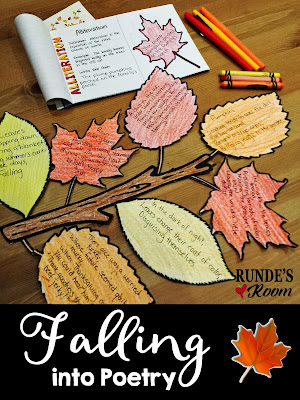
- Falling into Poetry is easy with this resource that's perfect for the beginning of the year when the leaves start to change.  Students get an introduction to many different forms of poetry, as well as figurative language.  There are examples of each type of poetry and figurative language device, as well as space for students to complete their own examples.  Completed pages turn into a beautiful poetry mini book.  Each poetry form also has a leaf outline so students can copy their best poems onto the leaf and colour for display.  There is a branch included for each student to make their own little poet-tree, or individual leaves could be added to a bulletin board, kraft paper tree in the classroom, or REAL branches for a gorgeous autumn display.  

I have also integrated this into an art activity, where students paint a Fall background on a page, then choose 2 -4 completed poem leaves to glue down onto the background for a beautiful writing and art piece.  Click either picture to take a closer peek at this resource in my store.


2.  Clay Sculpted Leaf Art - Every year I look forward to decorating my classroom with gorgeous Fall Leaf Art.  For these beautiful Fall Leaf bowls, we used air dry clay.  I had students pick a real leaf from the school ground (a fallen leaf, of course) - one they felt they could trace.  Students were each given some air dry clay to flatten out to about 1/4 of an inch thickness (and just slightly larger than the leaf they chose).  Note - be sure to have them work with the clay on some type of paper, it's no mess that way.  Students then used a pencil to trace around their leaves on the wet clay, and then used a plastic butter knife to "cut out" their leaves and draw on the veining (copying their real leaf).  When done, we put them vein side down, over some crumpled up paper to sort of form the leaves into a slight bowl shape.  It takes about 3 - 4 days to fully dry.  Once dry, paint (we used acrylic paint) the leaves in gorgeous Fall colours.  Experiment a bit with this.  Using a toothbrush to splatter some of the paint on top makes very realistic spotting on the leaf - and practice mixing and blending with colours.  We sealed our leaves with a spray varnish when complete, but you don't need to do this step.


Fall Leaf Art Lesson

3.  More Leaf Art -
This Fall Leaf Art Lesson is perfect to study line, shape, form, and colour with the elements of design.  Students will trace 2 - 4 leaves on their page, then fill the rest of the page with concentric circles (if you're brave you can have students use a compass, or use the page I included with the circles already drawn).  Choose 3 or more warm colours for the leaves, and colour each section made (by the circles) in a pattern.  When the leaves are coloured, choose 3 or more cool colours for the background, again alternating colours in a pattern.  The leaves look like they're falling against a beautifully windy sky backdrop, or falling into a pool of water.


October Literacy 3D Activities

4.  ALL the Craftivities
- While I do love to sneak in my 3D craftivities at different points in the year, I have to admit, all the Fall ones top my list.  These activities make the perfect station activity, or independent work activity so you can meet with small groups or get some assessment done while students are hard at work.  Each one takes approximately one week.  I usually have students finish 2 questions (2 panels) from Monday - Wednesday.  On Thursday they colour all the panels, and then Friday is assembly day.  I have craftivity packages for both literacy and math.  The October Literacy 3D Craftivities Bundle has two different book report resources covering story elements and reading comprehension (the pumpkins and the ghost), as well as a fun one for synonyms and over-used words.  The Fall Math Review 3D Activity Bundle has a candy corn place value review, as well as a pumpkin pie shaped activity with word problems (about pumpkin pies, of course).  Click on either title or picture to the right to see these resources in my TpT store.

Fall Math Review 3D Activity Bundle


5.  Fall Drama Circle
- You can't have all that Fall beauty without a little drama. ;)  A drama circle, that is.  This is a new drama circle with a Fall theme - make a circle, hand out the cards, and have some fun.  If the weather is nice, this one is even better outside!  All drama circles now contain colour and black and white copies, and a observation rubric for assessment of drama skills.  Click HERE or on the picture below to take a peek.

Fall Drama Circle
Fall Activity Bundle for Upper Grade Classrooms

You can find all of these Fall-themed resources in one bundle that can take you through the month of October in your classroom.  You can out my Fall Activity Bundle HERE, or by clicking the picture on the right.

Candy Corn Decimals Printable
And lastly, if you made it all the way to the bottom, reward yourself with this little Candy Corn Decimals Place Value Printable.  Just click on the picture to the right to grab a copy for yourself.  Happy Fall, Y'All!


Skip Counting Your Way Through Art

08 October 2021

Runde's Room Skip Counting Spiderwebs for Halloween
These Skip-Counting Spiderwebs are one of my best Halloween tricks (tips?) to keep your students focused and busy on Halloween day.  Seriously.  Let's face it - the excitement in the room makes it hard to settle, so it's not the time to start a brand new concept.  A few years ago I started to do this activity in the morning on Halloween, and we get in a great skip-counting practice and create an awesome art project with lines, shape, and repetition.  It's calming and mindful, and will take around an hour to complete.  Put on some low spooky music in the background, and your students will be engaged, working, QUIET, and learning.  


Runde's Room Skip Counting Spiderwebs for Halloween

Integrating math and art isn't scary on Halloween.  To start these spirographs, you need a circle divided into an even number of numbers (make a dot and write the number) around the ouside (1-18, 1-24, 1 - 30, etc.)  The higher your number of dots, the more intricate the pattern.


You have to use a ruler for this activity - if the lines aren't straight, it won't look right.  Also, I would usually get students to work first in pencil in art activities, but not on this one.  They will be drawing so many lines, they will have no desire to trace back over every line when they are done.  We use extra fine tip sharpie markers, but any extra fine pen tip will work.

Runde's Room Skip Counting Spiderwebs for Halloween

Starting at 1, skip count by 1 (dot to dot style), around the whole circle.  When you get back to the top (dot 30), start over, but this time skip count by 2s (join every second dot to dot).  Continue in this pattern, skip counting all the way around the circle (until you get back to the starting dot for every time around the circle).  

You can skip count all the way up to the twelves times table, or even further for a challenge.  Cut out around the circle (cutting off the numbers) when complete and glue your spiderweb down on some contrasting paper.

Runde's Room Skip Counting Spiderwebs for Halloween

To add a little extra Halloween flair to our spiderwebs, you can buy some spiders at the dollar store, or make them with pipe cleaners and googly eyes, and glue the legs down so that they are crawling across the webs.  These make an awesome Halloween display of learning!

Runde's Room Skip Counting Spiderwebs for Halloween

This art project isn't limited to Halloween though - brighten up your webs by using a different color for each skip count around the circle for a bright and beautiful spirograph!  Or start with an oval instead of a circle and create a gorgeous Easter Egg!!!  (I'm going to try this one next!)   Students can even color inside the little shapes made within the spirograph.

Click on any of the pictures in this post to take a peek at this Skip-Counting Halloween art lesson in my TpT Store.


Collaborative Resources as Important Discussion Starters

05 October 2021

With disrupted school years a few years in a row now, I noticed a few important conversations we needed to have much earlier than previous years.  These conversations have focused on being kind, showing our positive character, social media use, and using mindfulness.  Each of these resources or ideas gets your students reflecting on their opinions, feelings, or self-awareness of different attributes and once completed, are the perfect starting points for initiating whole group discussions.  Because students have already reflected on, tried, or talked about the activity, their discussions have been much richer and deeper ... and rewarding.

Runde's Room


My students have spent too much time online - for school AND social media.  I've been trying to reduce or balance the amount of technology my students are using in the classroom at the moment - instead choosing to complete more activities together, through discussions or with good old paper and pencil.  They are also talking about social media WAY more than they used to before.  What they saw, or did, or posted, or watched, or liked ... or whatever.  This Stick-It-Together Collaborative Activity for Social Media will help me start those important social media and internet safety lessons with students ... and will get them sharing their opinions and feelings in small groups, and in writing.  There are over 30 different social media reflection questions (on pros and cons of social media and different apps).  Each student will answer the question on a sticky note independently at first, then groups of 4 students will "stick" their answers together to build their best possible collaborative answer.  When groups are done, allow them some time to share their answers with the whole class - the perfect way to start an important conversation and let students share or defend their opinions.


Some days, thankfully not too many, I also have wondered if my students have completely forgotten ALL their positive character traits, and what makes them the fabulous students they are.  We have gone back to discussing exactly what the positive character traits look like, and how they can show how they are demonstrating them.  This Building Character Stick-It-Together Resource is another way you can have your students working collaboratively to reinforce their good character skills, and brainstorm ways to demonstrate these skills around the classroom and school.


As we have been discussing how important is to BE KIND ALWAYS, I also introduced some kindness rewards into the class.  I purchased some vinyl laptop stickers on Amazon, and added them into my pocket chart for some "Kind Sticks" rewards.  We have a daily kindness challenge posted on the board every morning, and when students complete the challenge, they initial the board.  Right before our last recess, I ask students to share what kind act they did, and how it made them feel.  Sometimes I post individual challenges like, "Do a favour for 3 classmates today", and sometimes it will be a whole class challenge, "Do something well as a class to earn a compliment from a different staff member (not me)".  They are loving these stickers, and are using them to cover their notebooks, folders, binders, and water bottles.


And lastly, I'm not sure if it's just my class, but the ENERGY these kids returned to school with is amazing.  I am exhausted!  They seem like they can just keep going and going and going.  Our energy is usually quite high after we come in for recess or after lunch, and it's taking a bit to settle after transitions.  I knew I wanted to start some mindfulness activities in the classroom, so I created a Cursive (and Printing) Writing Practice Mindfulness Activity (because multi-tasking is my life ... even during mindful moments).  The resource also contains all the same sheets for regular printing practice as well). These pages will give your students explanations for mindfulness as well as many short mindfulness tips and activities they can try in the classroom and outside of it.  With so many of our students needing a little extra mental health self-care, using mindfulness is a wonderful way to reduce anxiety, stress, and learn to self-regulate better.